There is no shortage of confident predictions online about how AI will trigger a major wave of lay-offs. The professions said to be most at risk are those that leave behind digital traces. These traces can be collected, turned into large databases and then used to train AI models to identify patterns and generate their own digital outputs. By this logic, AI is expected to push the original creators of those digital traces – programmers, lawyers, accountants or radiologists – out of the labour market.
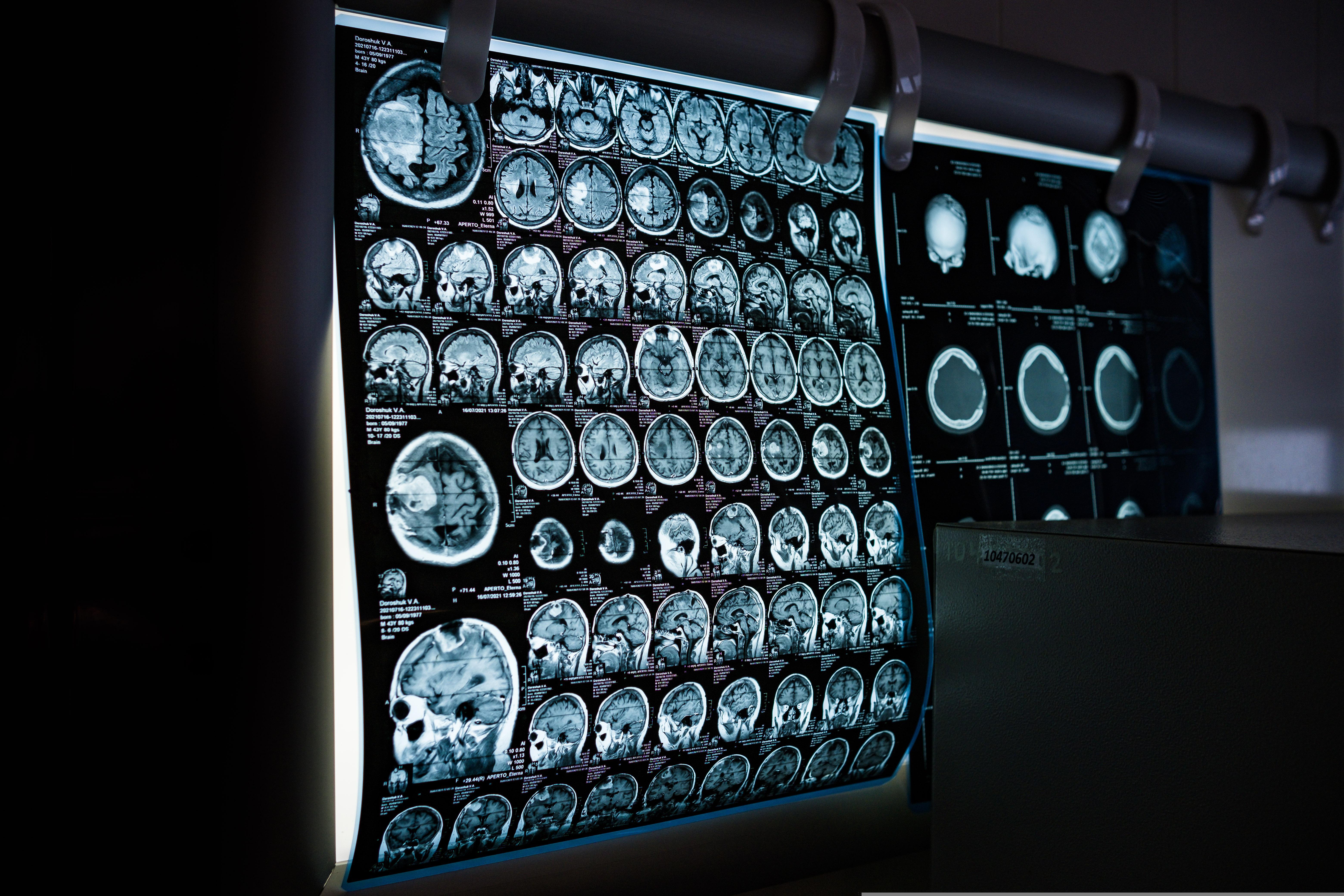
The latter are among the professions in medicine most frequently cited as being vulnerable to replacement by AI. There is a vast amount of radiology data in the form of digital images; fundamentally, this is a task based on pattern recognition, and there is also clear feedback for model training. In retrospect, we can determine which diagnoses were correct and where mistakes were made. AI, in other words, “feels at home” in such an environment.
That is why the winner of the 2024 Nobel Prize in Physics, Geoffrey Hinton, who is commonly referred to as the “godfather of AI”, once warned: “If you work as a radiologist, you are like the coyote that is already over the edge of the cliff, but hasn’t yet looked down, so he doesn’t realise there’s no ground underneath him. People should stop training radiologists now. It’s just completely obvious that within five years deep learning is going to do better than radiologists.”
This reasoning, however, has one flaw: he said it in 2016. Even then, there were already functional AI applications capable of outperforming even top radiologists in controlled tests. Many were convinced that radiologists would soon be replaced by AI. Today, 10 years later, we know that this has not happened. There are more radiologists working in the US than ever before, and there are still vacant positions on the market that cannot be filled.
More work than ever
If AI was able to outperform top radiologists years ago, why hasn’t it replaced them?
The first reason is known to economists as the Jevons paradox. It occurs when, thanks to innovation, a resource can be used more efficiently – producing more output with fewer inputs – yet its overall consumption still increases.
A classic example is coal during the Industrial Revolution. Steam engines were constantly becoming more efficient, requiring less coal per unit of work, but overall coal consumption still increased. The reason was simple: more efficient machines began to be used even in places where it previously did not make economic sense. Efficiency increased demand.
Something similar may happen with professions affected by AI. When a service becomes faster, cheaper and more accessible, people begin to use it more. If AI makes X-rays, CT scans or MRI imaging more efficient, doctors may send patients for imaging examinations more often. And if demand for these services grows faster than AI can take over specific tasks, the result could actually be more work for radiologists, not less.
One task is not enough
The second reason is even more important. Almost no job consists of just one isolated task; rather, it is a bundle of many tasks. Some are technical, while others require communication, organisational skills, decision-making or legal responsibility.
A radiologist does not simply read images; in fact, this takes up only about a third of their working time. In addition, they communicate with colleagues, consult the clinical context, meet with patients and explain findings, help determine the next course of action, participate in drafting protocols, train junior colleagues, sign off on examinations and bear legal as well as professional responsibility for the result.
This is where many exaggerated predictions break down. Correctly predicting whether AI can handle one specific task does not mean correctly predicting whether the entire profession will disappear.
This distinction is further developed in a recent economic study titled Weak Bundle, Strong Bundle: How AI Redraws Job Boundaries. Its authors argue that it is not only the extent to which AI can replace humans in performing individual tasks that matters. What is equally important is how strongly these tasks are interconnected – in other words, how high the coordination costs are.
If these costs are low, some tasks can be relatively easily extracted from the bundle and replaced by an external service, such as an AI model. If the costs are high, however, automating one task does not necessarily mean the entire profession will be significantly affected. It is not enough to know how to perform a given task. That task must also be embedded in a broader process, aligned with other tasks, assigned responsibility, and linked to real-world decision-making.
This is also the case in radiology. Reading images is only one part of a much broader diagnostic process. Even if AI were able to perform this subtask very well, it does not automatically follow that the entire profession could be disassembled and one of its components replaced with a monthly subscription to an AI tool.
Be careful with predictions
This is why caution is needed when interpreting various papers and reports that estimate how exposed different professions are to AI-driven automation. On their own, such predictions do not tell us whether people in a given profession will actually lose their jobs. There is a huge difference between AI’s ability to perform a task and the ability of markets, companies and professions to reorganise the entire workplace around that capability.
For similar reasons, earlier predictions about the mass disappearance of industrial jobs due to automation have not been borne out. Almost 10 years ago, experts described Slovakia as the country where automation threatened the largest share of jobs. Today, around a quarter of Slovaks still work in industry, and there are still many vacancies.
No one knows today exactly how AI will reshape the labour market. Technological visionaries, Nobel Prize winners and AI engineers do not know. Economists do not know either. Nor does the author of this piece.
But one thing we do know for sure: just because AI can perform some tasks better than humans does not mean it will automatically replace them. That is why all confident apocalyptic predictions should be taken with a grain of salt.
Translation of the original article was published on July 9th by The Slovak Spectator.